Mississippi First works with charter school operators, advocates, and the Mississippi Charter School Authorizer Board to support high-quality charter schools. We are dedicated to creating the conditions for high-quality seat growth, including supporting new school incubation, access to facilities, new talent pipelines, quality initiatives, and advocacy.
What are public charter schools?
Charter schools are free, public, and open to all students in the eligible grade and geography.
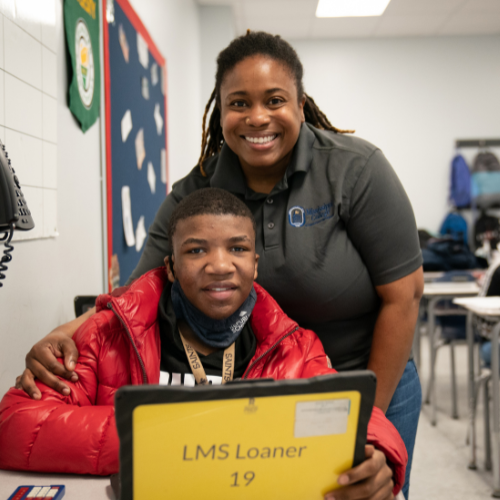
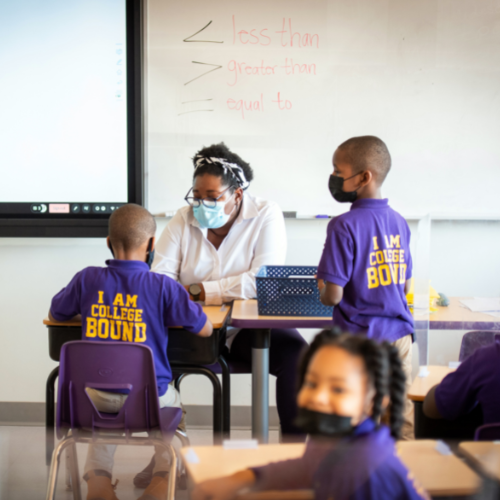

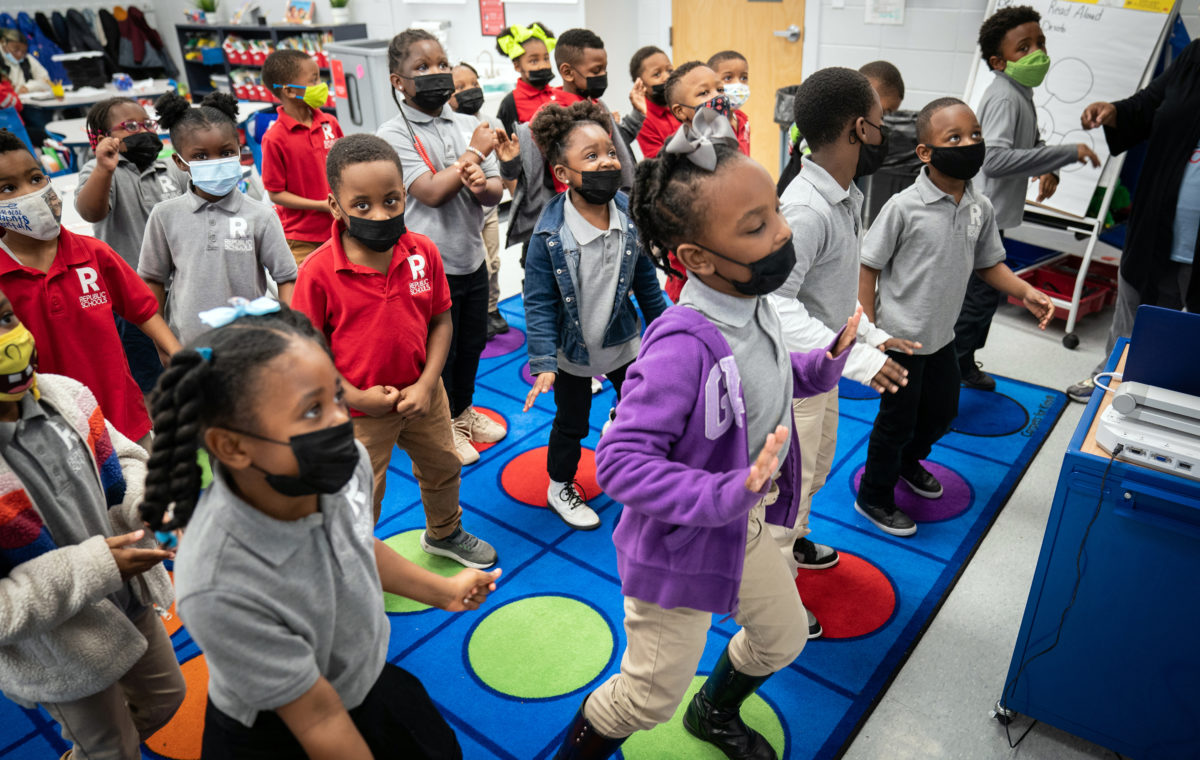
The Mississippi Charter Schools Act of 2013 defines charter schools as public schools that have flexibility over decisions including finance, personnel, scheduling, curriculum, and instruction because they are governed by an independent, non-profit governing board instead of the local school district board. Public charter schools do not charge tuition and are open to all students within the allowed geographic boundary, regardless of academic, athletic, or special education status.

Mississippi parents support charter schools.
Overall, strong majorities of all parents in Mississippi charter school communities support charter schools in their communities (75.1%). 96.3% of charter parents support charter schools in their communities while 72.7% of non-charter parents support them.

Parents believe public charter schools give more students access to a great public school education.
58.2% of parents in charter school communities believe opening a charter school has affected access to high-quality schools positively, including majorities of both types of parents (charter parents–84.5%; non-charter parents–54.9%).

Parents believe public charter schools provide a safe and nurturing environment where every student can get a great education.
Charter parents remain overwhelmingly satisfied with their child’s education and school environment. Almost 100% of parents are satisfied with their students’ academic progress, and agree or strongly agree that charter schools are preparing students for college.
Mississippi Public Charter Schools
There are ten operating schools located in five communities—Jackson, Clarksdale, Greenwood, Canton and Natchez. Together, over 3,000 Mississippi children receive their public education in a public charter school.


Mississippi Public Charter Schools Spotlight
In 2023, Mississippi celebrated the tenth anniversary of the Mississippi Charter Schools Act. To celebrate this milestone, Mississippi First published profiles of Mississippi’s approved and operating charter schools (as of April 2023).
Grants
Charter Schools Program Grant
The Charter Schools Program (CSP) is a competitive, national grant program eligible to state entities. Through this program, Mississippi First will subgrant 90% of funds to eligible charter school applicants to open new charter schools and/or to replicate or expand high-quality charter schools.
Programs
Charter School Fellowship
The Charter School Fellowship program is a summer program that cultivates interested educators and leaders in education to learn operational and leadership skills in hopes of expanding the leadership talent pool for public charter schools in Mississippi.
Latest News About Public Charter Schools
- Mississippi First Awarded $19.3M Charter School Program Grant to Expand Public Charter Schools
 Jackson, MS— The U.S. Department of Education has awarded Mississippi First a $19.3 million, five-year Charter Schools Program grant to grow high-quality public charter schools in Mississippi. Charter schools are free, public, … Read more
 - Introducing Our Charter School Fellows!
 Public charter schools empower communities to design high-quality, public educational experiences to meet their students’ needs. Charter schools are free, public, and open to all children in relevant grades. In the 2022-2023 … Read more
 - MCSAB Releases New Parent Survey Findings; Public Charter School Satisfaction Up
 The press release was originally published by the Mississippi Charter School Authorizer Board. JACKSON, MS–In 2017, the Mississippi Charter School Authorization Board (MCSAB) was awarded a federal Charter Schools Program grant, which … Read more
Our Research and Publications on Public Charter Schools
Check out our Publications page to see our extensive research and reports on public charter schools in Mississippi