


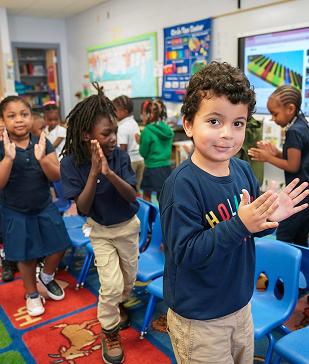
Head Start in Mississippi

Editor’s Note: This post is one in an ongoing series of posts dedicated to the federal role in early childhood in Mississippi.

By Micayla Tatum, Director of Early Childhood Policy
As Congress weighs funding decisions for fiscal year 2026, we want to explore the impact of federal early childhood programs in Mississippi. This blog post is the first in a series that highlights the impact of federal funding for early childhood on both families and communities throughout the state.
In Mississippi, many families live in rural areas with limited access to early learning and health services. Head Start1 plays an essential role in ensuring children and families are supported and prepared for school.
What Is Head Start?
Head Start is a child development program that provides children and families with access to many services and resources, including
- early childhood education and care,
- nutritious meals and snacks,
- health and mental health screenings and resources, and
- family support and resources.
Head Start was originally founded in 1965 as a summer program to help prepare low-income children for school. At the time, those children were largely five-year-olds who had not yet entered first grade. Over time, Head Start shifted to serve younger children as public kindergarten, and then pre-kindergarten became more common.
A Unique Funding Structure
Head Start is a uniquely funded program that funnels federal dollars directly to local entities. This funding stream was meant to allow local organizations to access resources while avoiding state-level politics during the Civil Rights Movement and the fight against Jim Crow laws. This funding structure is still the same today. Head Start programs in Mississippi were granted a total of $251.2 million in FY 2023, making Head Start the largest federal early childhood funding stream in the state. In comparison, Mississippi’s Child Care & Development Block Grant (CCDBG) received $96.9 million in FY 20232.
Head Start is administered through the federal Office of Head Start, which is housed at the Administration for Children and Families in the U.S. Department of Health and Human Services. Local Head Start grantees receive support and evaluation from regional offices.
Who Head Start Serves
As it currently exists, Head Start must reserve 90% of its seats for low-income children and families, defined as families with incomes at 100% of the federal poverty line or below, or families who would be eligible for public assistance.3 In other words, a family of four earning $32,150 or less per year qualifies for Head Start in 2025. The remaining 10% of seats are typically reserved for children with disabilities, though the seats are open to any “children in the area served who would benefit from such programs.”
In Mississippi, Head Start served 18,460 children aged zero to five in the 2024 program year (see Table 1) according to the Program Information Report (PIR).4 Four-year-olds, who are one year from entering public schools, were the largest population served by Head Start, with nearly 8,000 children served. Using the number of live births in Mississippi in 2020 as the denominator5, we can estimate that nearly a quarter (22.5%) of Mississippi’s four-year-olds are served in a Head Start program.

We Need Head Start to Thrive
In Mississippi, a largely rural state, Head Start plays an outsized role in maintaining families’ access to early childhood services. Additionally, the federal funds help buoy rural Mississippi communities by employing local teachers, social workers, mental health specialists, and many other staff, while also ensuring employers have access to a workforce with a consistent care option.
As Congress continues to deliberate on federal funding levels for the year ahead, it’s vital to recognize the critical role of Head Start in our early childhood sector.
1Head Start refers to a number of programs that the federal Office of Head Start operates. Head Start serves three- and four-year-old children in preschool programs. Early Head Start was created to specifically serve infants and toddlers. Some Head Start programs were created to serve specific populations, such as Migrant and Seasonal Head Start and American Indian and Alaska Native Programs. We will refer to all programs collectively as Head Start throughout the blog post, though not all programs were founded at the same time or operate in Mississippi.
2This represents the CCDBG and mandatory funds and does not include state match or COVID-relief dollars.
3Additionally, homeless children are eligible for participation, and an additional 35% of program participants whose families’ incomes are at 135% of the federal poverty line or below are eligible if grantees meet certain requirements.
4The Office of Head Start administers the Program Information Report each year to collect wide-ranging data from Head Start grantees about enrollment, staffing, families, and the services offered.
5According to the U.S. Census Bureau, approximately 34,545 children were born in Mississippi in 2020. These children would be aged four in the 2024 program year.
Related Posts

Mississippi’s Early Learning Collaboratives (ELCs) are #1 in the country for their high-quality pre-K programs. The ELCs currently operate in 40 communities and serve over 6,000 students. ELCs involve many partners, including school districts, Head Start programs, and licensed childcare providers. These partners commit to working together to provide high-quality pre-K to Mississippi’s four-year-olds. Despite our […]

Takisha Bishop, a business owner and childcare provider in Greenwood, MS, discusses the impact of the losing voucher students on her business and community.
Mississippi First is continuing its campaign to elevate the voices of real Mississippians who are highlighting the urgent childcare needs across our state. High-quality childcare is essential for children, working families, and our state’s economic future—but today, too many Mississippi families struggle to access or afford the care they need. Our video series spotlights real […]
Mississippi First is continuing its campaign to elevate the voices of real Mississippians who are highlighting the urgent childcare needs across our state. High-quality childcare is essential for children, working families, and our state’s economic future—but today, too many Mississippi families struggle to access or afford the care they need. Our video series spotlights real […]
Mississippi First is launching a new video campaign calling for increased appropriations to Mississippi’s Child Care Payment Program. High-quality childcare is essential for children, working families, and our state’s economic future—but today, too many Mississippi families struggle to access or afford the care they need. Our video series will spotlight real stories from families and […]
Editor’s Note: This post is one in an ongoing series of posts dedicated to the federal role in early childhood in Mississippi. By Micayla Tatum, Director of Early Childhood Policy This blog post is the third in a series that highlights the impact of federal funding for early childhood on both families and communities throughout […]

Editor’s Note: This post is one in an ongoing series of posts dedicated to the federal role in early childhood in Mississippi. By Micayla Tatum, Director of Early Childhood Policy We want to continue to explore the impact of federal early childhood programs in Mississippi. This blog post is the second in a series that […]

By Micayla Tatum, Director of Early Childhood Policy When the legislative session came to a close on Thursday, April 3, 2025, the legislature went home without passing a budget for the state government, including an appropriations bill for the Mississippi Department of Education (MDE) and the Mississippi Department of Human Services (DHS). On Wednesday, May […]

Jackson, Mississippi—Mississippi First is proud to announce the release of its newest report, 2023 Public Perception of Early Childhood Education in Mississippi, which provides valuable insights into Mississippians’ views on the importance, affordability, and accessibility of early childhood education. The survey results underscore the widespread public support for pre-K and early learning initiatives across the state. […]

Editor’s Note: This post is one in an ongoing series of posts dedicated to early education policy in Mississippi. *** By Micayla Tatum, Director of Early Childhood Policy A lack of wage parity is a longstanding issue in the early childhood profession. Childcare teachers, Head Start teachers, and public pre-K teachers have vastly different salaries and access […]

By Micayla Tatum, Director of Early Childhood Policy After four legislative sessions, we are excited to announce that our bill to permanently raise the per-pupil funding rate, HB 817, passed! The Governor signed the bill into law on April 17. This bill increases the state share of per-pupil pre-K funds from $2,150 to a minimum of $2,500 per […]
Editor’s Note: This post is one in an ongoing series of posts dedicated to early education policy in Mississippi. *** By Micayla Tatum, Director of Early Childhood Policy The educator pipeline crisis, which Mississippi First has researched extensively, also affects childcare centers, Head Start, and public school pre-K programs. In short, finding early childhood teachers is as […]